Room 202-3, Building 30, No. 220 Xianggong Road, Xiangzhou District, Zhuhai City
08.00 AM-09.00 PM
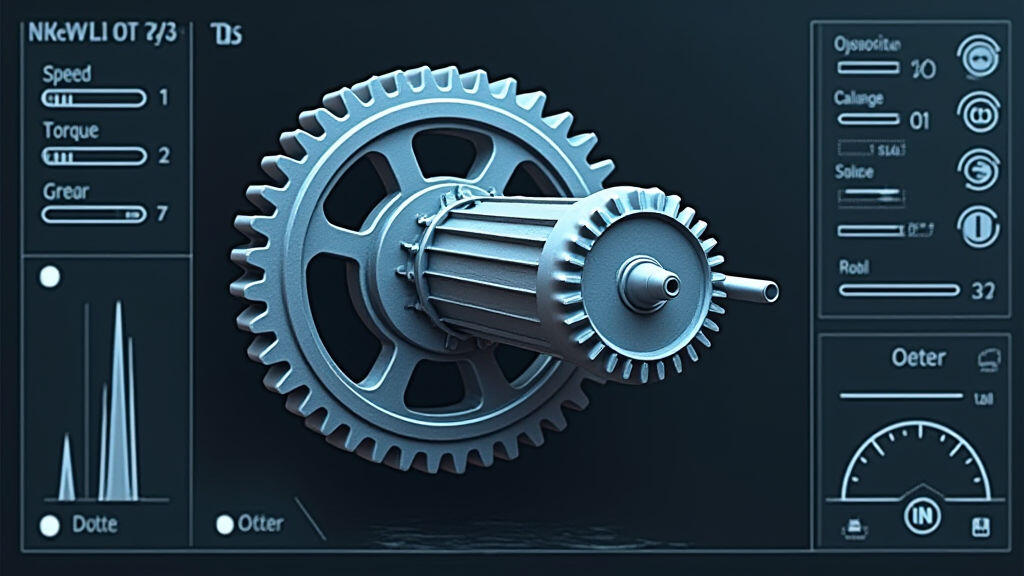
The robotics industry is experiencing explosive growth, fueled by advancements in artificial intelligence (AI), machine learning (ML), and the increasing demand for automation across various sectors. This surge necessitates continuous upgrades and modifications to existing robotics equipment, often involving gear motors – the unsung heroes responsible for precise and powerful motion. As robots become more sophisticated, the need for intuitive and accessible configuration strategies for these critical components becomes paramount. This article explores effective strategies for configuring gear motors within robotics upgrades, with a particular focus on leveraging “English” – meaning user-friendly, easily understandable interfaces and documentation – to streamline the process and minimize downtime. We’ll also touch upon how these strategies align with current trends like Industry 4.0 and the pursuit of collaborative robotics.
Gear motors are fundamental to robotic functionality. They combine the torque of an electric motor with the speed reduction provided by gears, offering the necessary power and control for a wide range of applications – from precise arm movements in assembly lines to robust locomotion in mobile robots. Their versatility makes them integral to everything from industrial automation to healthcare robotics and even consumer-facing applications like drones and smart home devices. Without efficient gear motor configuration, robotic systems suffer from inaccurate movements, reduced efficiency, and increased maintenance requirements.
Despite their critical role, configuring gear motors can be a complex undertaking. Traditional configuration methods often rely on technical datasheets filled with parameters like gear ratio, voltage, current, and efficiency curves. These datasheets, while necessary, are frequently difficult for non-specialists to interpret. This can lead to misconfigurations, requiring time-consuming troubleshooting and potentially halting production lines. Furthermore, integrating new gear motors into existing robotic systems requires careful consideration of compatibility, ensuring seamless operation and preventing system instability. The increasing complexity of robotic systems necessitates more adaptable and user-friendly configuration approaches.
The core principle underpinning effective gear motor configuration strategy is to move away from purely technical specifications and towards "English" – user-friendly language and intuitive interfaces. Here's a breakdown of crucial strategies:
1. Visual Configuration Tools: Instead of relying solely on text-heavy datasheets, visual configuration tools offer a more intuitive understanding of gear motor parameters. These tools often use graphical representations of the gear train, allowing users to adjust settings by dragging and dropping elements or selecting from pre-defined configurations.
2. Parameterized Configuration Libraries: Developing a library of pre-configured gear motor settings for common robotic applications drastically reduces setup time. These libraries act as starting points, customizable to specific system requirements. A well-organized library, indexed by application type (e.g., pick-and-place, linear motion, rotary motion), makes it easier to find suitable configurations.
3. Simplified Documentation: Datasheets should be redesigned with clarity in mind. Using illustrations, charts, and simplified explanations of key parameters (e.g., “Speed: How fast the motor rotates”), rather than dense technical jargon, improves comprehension. Interactive documentation, incorporating dynamic diagrams and parameter simulations, can further enhance the learning experience.
4. AI-Powered Configuration Assistants: Leveraging AI and ML can automate much of the configuration process. AI-powered assistants can analyze the robotic system's specifications (e.g., required speed, payload, workspace) and automatically suggest optimal gear motor configurations. They can also learn from past configurations and continuously improve their recommendations. This is particularly valuable for complex systems with numerous variables.
5. Standardized Communication Protocols: Adopting standardized communication protocols (e.g., Modbus, EtherCAT) allows seamless integration between the gear motor controller, the robot controller, and other system components. This facilitates automated configuration and parameter adjustment, enabling dynamic adaptation to changing operational needs.
MES-Drive is committed to simplifying gear motor configuration through a combination of advanced technology and user-centric design. Their platform offers a cloud-based configuration tool with visual parameter adjustments, a comprehensive library of pre-configured settings, and an AI-powered assistant that provides intelligent recommendations. MES-Drive also provides detailed, easy-to-understand documentation and comprehensive training resources to ensure users can effectively configure and maintain their gear motors. MES-Drive’s approach aligns perfectly with the evolving needs of the robotics industry.
The rise of Industry 4.0 – characterized by interconnected systems, data-driven decision-making, and automation – is accelerating the demand for flexible and adaptable robotics solutions. Gear motor configuration must evolve to meet these demands. Similarly, the increasing adoption of collaborative robots (cobots), designed to work alongside humans, emphasizes the importance of ease of use and accessibility. Simplified configuration strategies are crucial for enabling non-technical users to easily adapt robotic systems to new tasks and workflows, fostering greater collaboration between humans and machines.
Looking ahead, we can expect to see:
Optimizing gear motor configuration is vital for achieving peak performance and efficiency in robotics equipment upgrades. By embracing "English"-based strategies – prioritizing user-friendly interfaces, simplified documentation, and AI-powered assistance – the robotics industry can overcome current challenges and unlock the full potential of these essential components. The integration of these strategies aligns perfectly with the driving forces of Industry 4.0 and the growing importance of collaborative robotics. With innovative solutions like those offered by MES-Drive, the future of gear motor configuration is bright, paving the way for more adaptable, efficient, and accessible robotic systems that empower businesses across a broad spectrum of industries. The focus on simplified configuration isn’t just about ease of use; it’s about accelerating the adoption of robotics and unlocking the next wave of innovation.

Leave A Reply
Your email address will not be published. Required fiels are marked